
Euphoria Season 3 Review: A Beautiful Goodbye That Didn't Always Know Where It Was Going

Few television shows have carried the weight of expectation quite like Euphoria.
By the time the third and final season premiered, it had been four years since audiences last stepped into Rue's world. During that time, the cast became bona fide movie stars, fan theories multiplied, and real life inevitably shaped the future of the series in ways no one could have predicted. The tragic passing of Angus Cloud alone meant that whatever ending Euphoria was originally building toward would have to evolve into something different.
Perhaps that's why I never expected perfection.
What I did expect was a season that understood what made Euphoria so captivating in the first place. At its best, the series was never just about drugs, relationships, or spectacular visuals. It was about deeply flawed people trying to outrun themselves. Every glitter-covered party, every dreamlike sequence, and every heartbreak worked because the emotional core underneath it all felt painfully human.
The final season still captured glimpses of that magic. It remained visually stunning, the performances were exceptional, and there were moments that reminded me why this series became such a cultural phenomenon. At the same time, it often felt like the writers were far more interested in moving pieces across the board than allowing those moments to breathe.
Several characters who once felt essential became strangely underdeveloped, while others were given storylines that never quite justified the amount of time devoted to them.
By the finale, I found myself feeling less disappointed by individual plot points than by the opportunities the season left behind.
Rue's Ending Was Tragic, but the Silence That Followed Was Even More Heartbreaking

From the very first episode, Euphoria positioned Rue as more than its protagonist. She was also its narrator, which meant audiences experienced nearly every major event through her perspective. Whether she was making good decisions or self-destructing, the emotional center of the series always returned to Rue.
That's why her ending was always going to determine how viewers ultimately felt about the season as a whole.
I wasn't necessarily disappointed that the writers chose tragedy. One of Euphoria's defining characteristics has always been its willingness to reject tidy resolutions, particularly when it comes to addiction. Recovery is complicated, relapse is common, and life doesn't always reward people simply because they're trying.
What surprised me was how quickly the series moved on.
Television has taught us that grief isn't simply about the moment someone dies. It's about the silence that follows. It's watching the people left behind learn how to exist in a world that suddenly feels unfamiliar. Considering how much time the series invested in Rue's relationships with Jules, Lexi, Ali, Leslie, and especially Gia, I expected the finale to linger there.
Instead, the emotional aftermath felt strangely abbreviated.
For a character who carried the entire series on her shoulders, it was jarring not to see the people closest to her truly mourn her. The absence of that grief made an ending that should have felt devastating feel oddly incomplete.
Ali Quietly Became the Moral Center of the Series

If there was one character who consistently grounded the final season, it was Ali.
Throughout the series, Ali represented something Euphoria often struggled to offer its characters: accountability without judgment. His relationship with Rue was never built on rescuing her. It was built on reminding her that recovery required honesty, patience, and the willingness to keep trying even after failure.
That dynamic remained one of the strongest parts of the final season.
Watching Ali continue to care for Rue, even when hope felt increasingly fragile, provided some of the show's most emotionally authentic moments. His eventual confrontation with Alamo was also one of the few storylines that felt genuinely earned. Rather than existing for shock value, it carried the emotional weight of someone finally refusing to allow another destructive force to continue hurting the people around him.
In a season filled with uncertainty, Ali remained remarkably consistent.
Some Characters Felt Like They Were Waiting for Stories That Never Came

One of the biggest challenges of any ensemble drama is deciding where to spend its time, and unfortunately Euphoria often struggled with that balance in its final season.
Maddy initially appeared poised for the kind of storyline many viewers had been hoping for since the end of Season 2. Having finally stepped away from Nate's orbit, there was an opportunity to explore who she might become when she was no longer defined by one of television's most toxic relationships. The season hinted at that possibility early on, but never fully committed to it. Alexa Demie remained magnetic as always, yet by the finale it was difficult to describe how Maddy had actually changed.
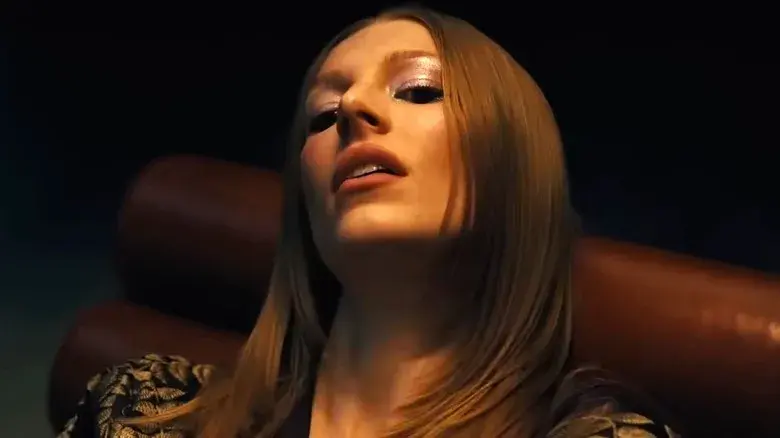
Jules suffered from a different problem.
For much of the series, Jules served as Rue's emotional counterpart while maintaining a compelling identity of her own. This season, however, she often felt like someone reacting to events rather than actively shaping them. Hunter Schafer continues to be one of the show's strongest performers, which made the lack of meaningful material even more frustrating.
There was so much emotional territory left unexplored that it became difficult not to wonder whether Jules deserved an entirely different final chapter.

Lexi also felt noticeably different, though not in a way that entirely worked for me. Character growth is one thing, but there were moments where it felt as though the writers had lost sight of the thoughtful observer we had spent two seasons getting to know. Change is inevitable, particularly after a significant time jump, but the emotional continuity didn't always feel convincing.

And then there was Gia.
Perhaps the biggest unanswered question I was left with wasn't about Rue at all. It was about her younger sister.
Gia spent years quietly carrying the emotional consequences of Rue's addiction. She witnessed the chaos, absorbed the fear, and often became collateral damage in ways the series handled with remarkable sensitivity. Given everything that happened in the finale, her limited presence felt particularly surprising. If Rue's story was always about the people addiction leaves behind, Gia deserved far more attention than she ultimately received.
Nate and Cassie Never Escaped Their Own Cycle

I wanted more from Nate.
Not redemption, necessarily, but resolution.
For years, Nate Jacobs stood as one of the most psychologically complex characters on television. His struggles with masculinity, control, shame, and inherited trauma offered countless opportunities for a nuanced conclusion. Instead, much of his storyline felt as though it revisited familiar territory without pushing the character toward any meaningful destination.
Cassie's story suffered from a similar problem.
Sydney Sweeney remained excellent throughout the season, but there is only so much an actor can accomplish when the narrative continues asking the same questions without offering new answers. By the end, I wasn't frustrated because Cassie hadn't changed enough. I was frustrated because the show didn't seem particularly interested in exploring why she hadn't.
The Supporting Characters Offered Welcome Bright Spots

One thing Euphoria has always done well is finding moments of levity within extraordinarily heavy subject matter.
Marshawn Lynch's character became one of those unexpected bright spots. His presence brought a welcome sense of humor without ever undermining the emotional stakes of the story. Those scenes offered audiences a chance to breathe before returning to the intensity that has always defined the series.
I also found myself wanting considerably more from Bishop. Every appearance suggested there was a richer story waiting beneath the surface, yet the season never fully explored it.
A Quiet Tribute That Meant More Than Words Could

One creative decision I genuinely appreciated was the way the series handled Fezco.
Following the heartbreaking loss of Angus Cloud, the writers faced an impossible task.
Rather than using the character's death as another source of tragedy, allowing Fezco to remain alive within the world of Euphoria felt like a quiet and deeply respectful tribute. It acknowledged reality without asking the audience to experience that loss twice.
Sometimes the most meaningful tribute isn't found in dialogue or memorial scenes.
Sometimes it's simply allowing a beloved character to continue existing.
Goodbye, Euphoria.

Looking back, I don't think Euphoria's final season failed because it lacked ambition. If anything, it may have tried to accomplish too much while leaving too little room for reflection.
The performances were consistently outstanding. Zendaya once again demonstrated why Rue remains one of television's most unforgettable protagonists, and nearly every member of the cast elevated material that occasionally felt uneven. Visually, the series remained gorgeous, proving that few shows understand atmosphere quite like Euphoria.
What I missed most was time.
Time to sit with grief.
Time to watch characters process the consequences of their choices.
Time to say goodbye to people we'd spent years getting to know.
After waiting four years, I wasn't expecting every storyline to end happily. I was simply hoping the show would linger a little longer before closing the door.
For a series that always understood the importance of emotion, the finale sometimes seemed in a hurry to move past it. And perhaps that's why the ending has left so many viewers divided. It's not because every question needed an answer. It's because some of the most important emotions never had the chance to fully unfold.


Comments